I have been a regular visitor to Anglesey for the last 38 years. It is a place of mystery and beauty. This castle which has long stood as guardian added a controlling element for some time but would never have tamed the island completely. It is however one of the more famous features of the island and an enjoyable subject in my tour of the castles that controlled north Wales.
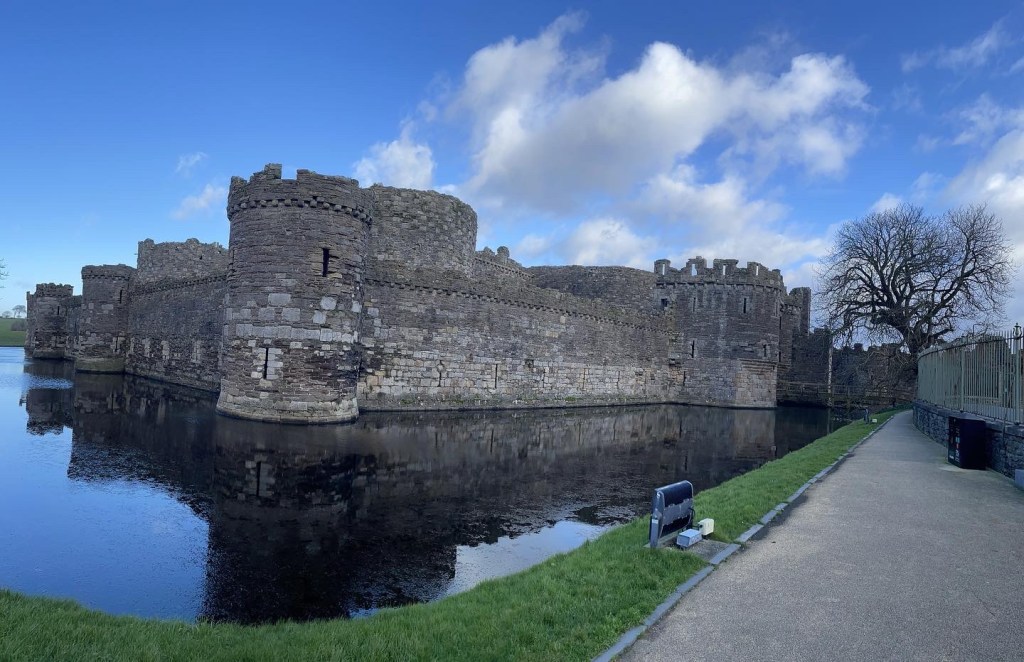
Construction of Beaumaris Castle began in 1295 to secure the island in the destructive wake of Madog ap Llewelyn’s rebellion. The design of the castle would be ambitious with a larger footprint compared with the likes of Conwy and Caernarfon, it would also boast concentric walls making it brutally effective. The castle would sadly never be completely finished although that does not mean that it was weak. It was still very much a show of power and an act of control. It now stands in the good care of CADW for us all to enjoy.

The Meni Straits are a barrier that in modern times requires two bridges that allow us to cross freely Now spanned by two mighty bridges these have not always been in place from the mainland offering a physical barrier for opposition to cross. Before Madog’s rebellion, he was able to raise forces quietly over the waters without Edward realising the danger. In 1294 Madog was at the head of a revolt of disgruntled Welsh and launched an initially successful attack on the new English castles. Harlech was besieged as was Conwy where Edward himself was trapped. Caernarfon was not at this stage complete allowing the attackers to easily scale the walls and butcher the defenders. Ultimately this would end in defeat and Madog being taken to London as a prisoner. This lesson however convinced Edward that he needed a castle on Anglesey.
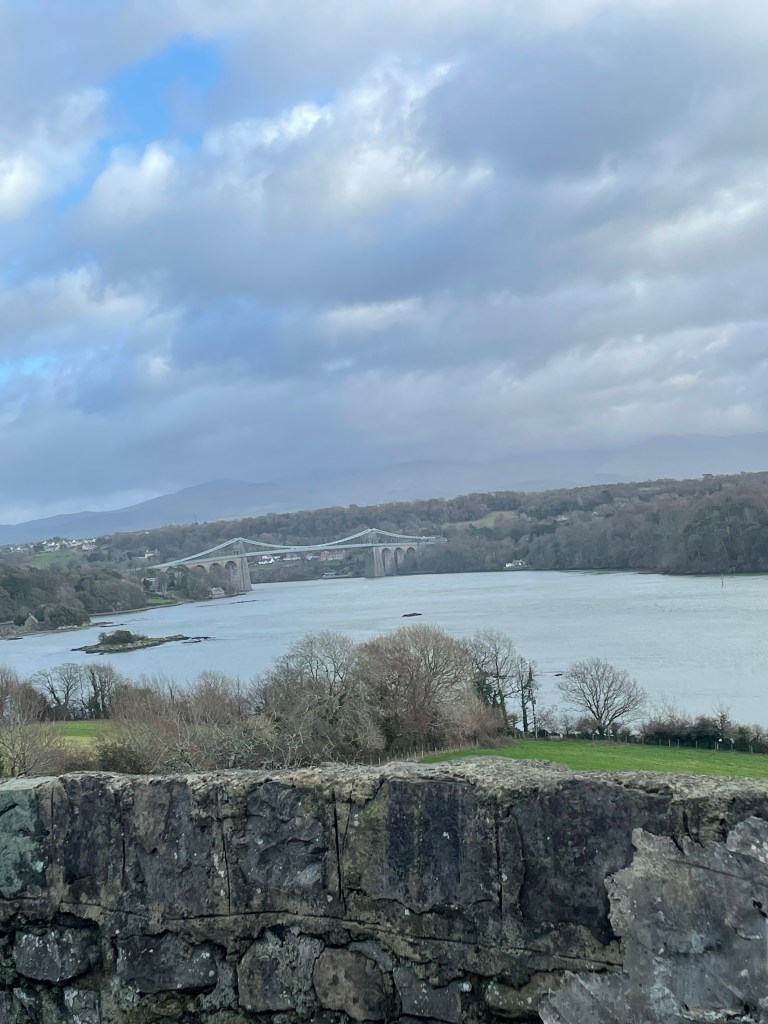
The Beautiful marsh
The name of the Town and castle comes from the French for Beautiful Marsh or Beau Marais. Parking in the main car park and observing the mountains in the distance will tell you where the beautiful part comes from. Anglesey is a very picturesque land and this is no exception. This town however was not welcomed by the locals during its construction, The local village of Llan Faes was emptied and the townsfolk were relocated to the village of Newborough or Niwbwrch. Materials from Llanfaes were pillaged for the construction of the settlement around Beaumaris castle which would grow as a trading hub.
An unfinished masterpiece
The construction of the castle got underway well but events in the north were drawing more of Edward’s attention. His involvement in the succession issues in Scotland was stirring up trouble and in 1297 William Wallace joined up with Andrew de Moray. Victory at Stirling Bridge in September of 1297 and the following conflicts diverted coin away from the building project in Beaumaris. There are numerous letters to the treasury from Both James and the clerk of the works Walter of Winchester asking for more money as they watch the effort slowly fall apart.
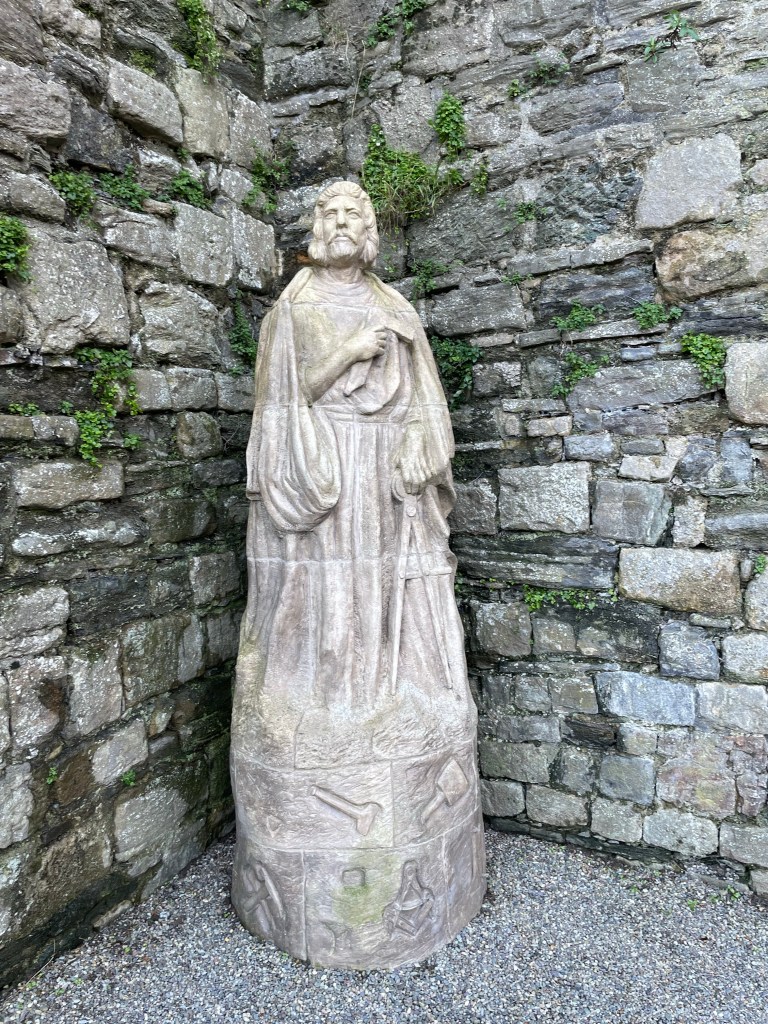
The Master
As you walk around the inner parts of the castle, you will notice this chap. This recent addition is a depiction of the architect behind the castles that dominated north Wales. James of St George. James was originally based in Savoy where he had created some fine works and caught the eye of Edward. He arrived in England as Flint Castle was being built. the next phase of castles in Wales has some of his influence. More on James is planned for a later post.
On this note, the staff at Beaumaris often put on small activities to join in on both for adults and children. Add to this the town which is also worth a look round as they rely on tourism and have plenty of trinkets as well as food and drink to sell to those visiting.
What could have been?
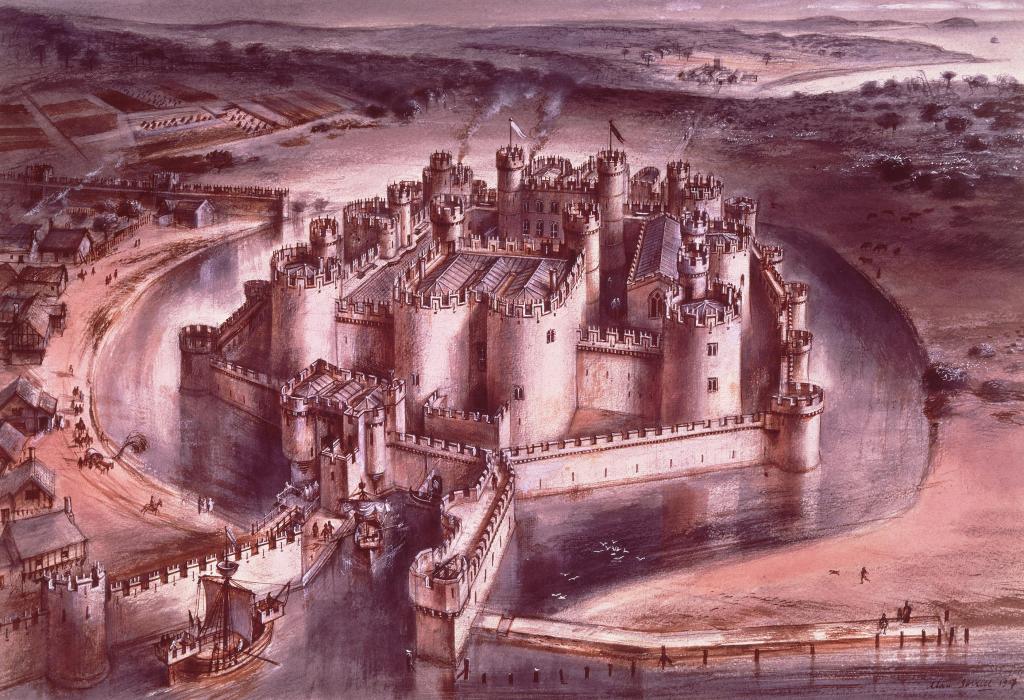
The Above painting by artist Alan Sorrell which is widely found online Shows how Beaumaris castle could have looked. Notice the extra height and archers’ nests atop the towers. There is also the leads roofing and the completed other ward. No doubt the north gate is also complete as James of St George may have desired had the money not been redirected to support Edward against his Scottish adversaries. You can also see the town wall and ship unloading bays protected by gunners’ walk
In support of one another
The ring of castles was designed on the theory that each castle was within a short march of another in the chain. If you consult the maps you can see this proximity, I recently went walking in the mountains nearby and this point was hammered home on my lunchtime viewpoint on the side of Glyder Fawr as I could see Both Beaumaris and Caernarfon and the short distance. Sadly Conwy was blocked from my vision by the Carnedd Llewelyn which I’ll be walking soon.
The main gates.
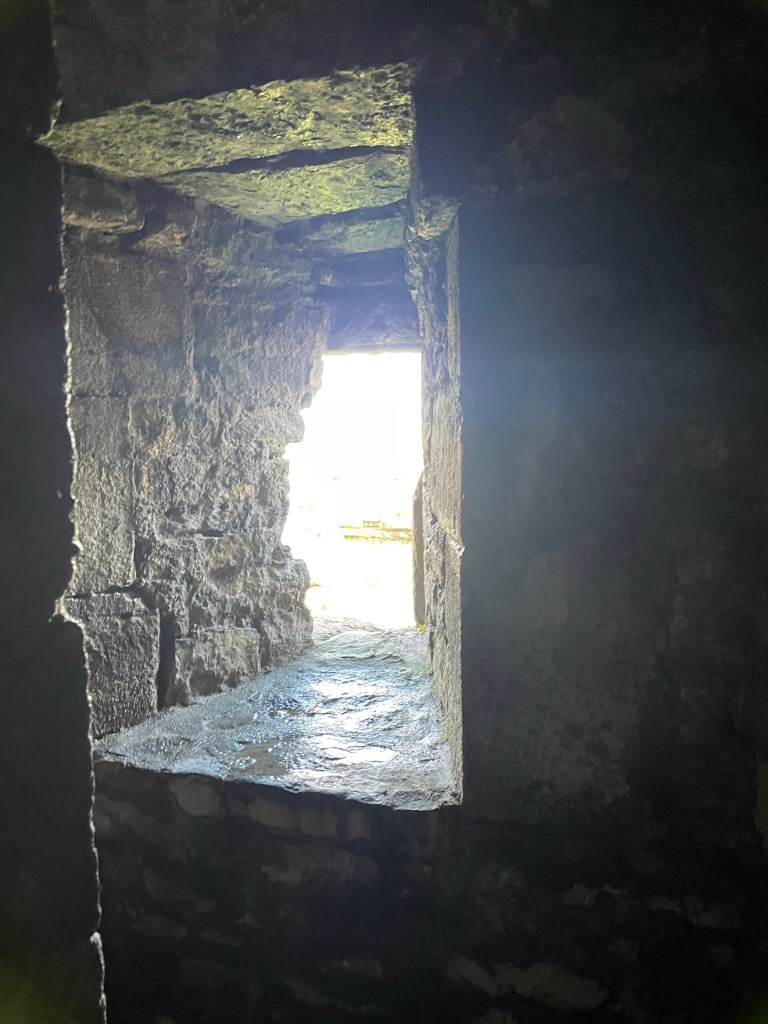
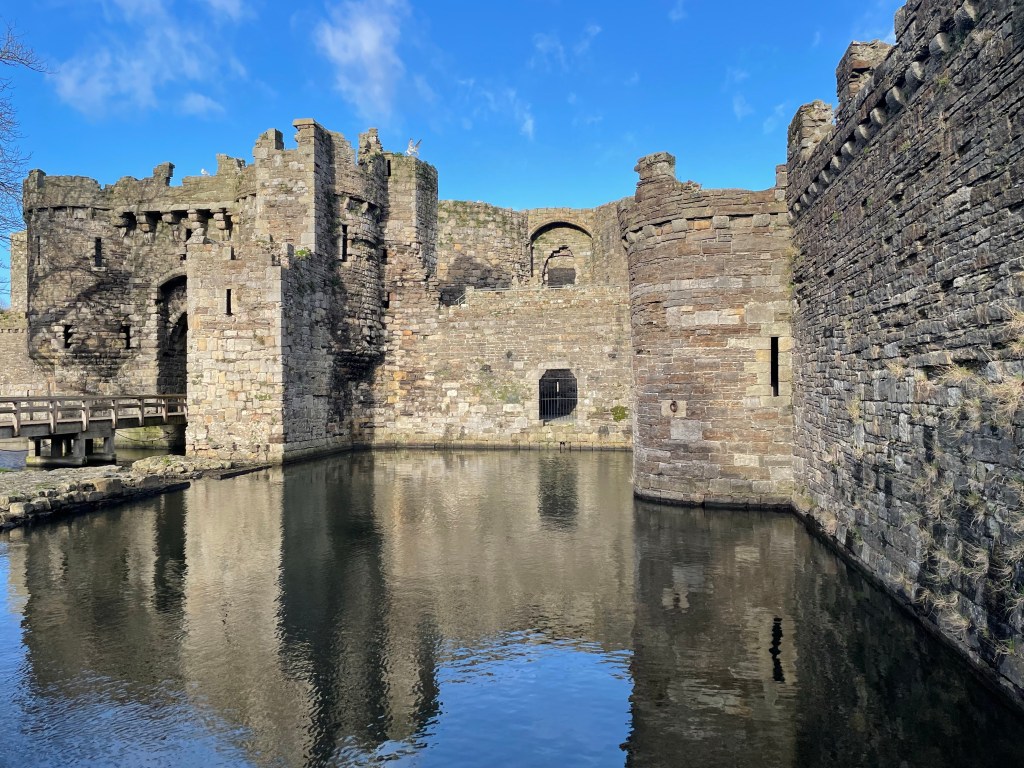
One thing I always find interesting when entering a castle is, well entering the castle. The main gates are in theory the quickest and easiest way into the heart of the castle, so looking at what is in place to guard this passageway intrigues me. Passing over the moat and in through the outer Gate you realize there are many arrow slits facing you from all angles, the battlements stand high above. This is also by the docking area and can be covered by ‘Gunners Walk’.
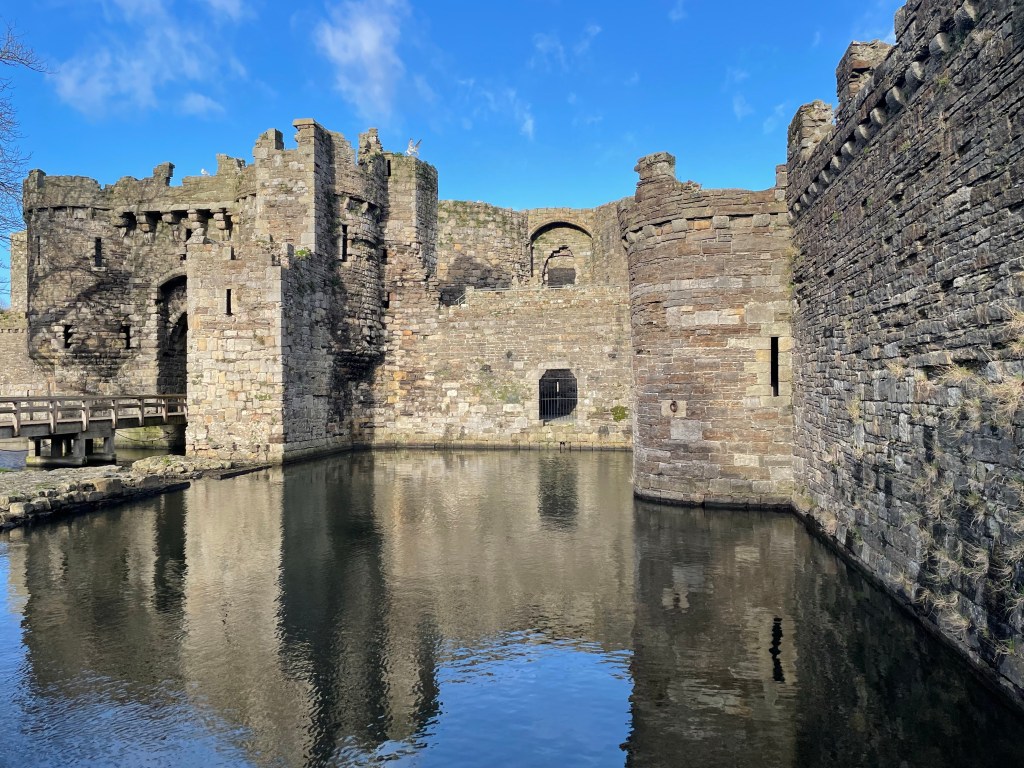
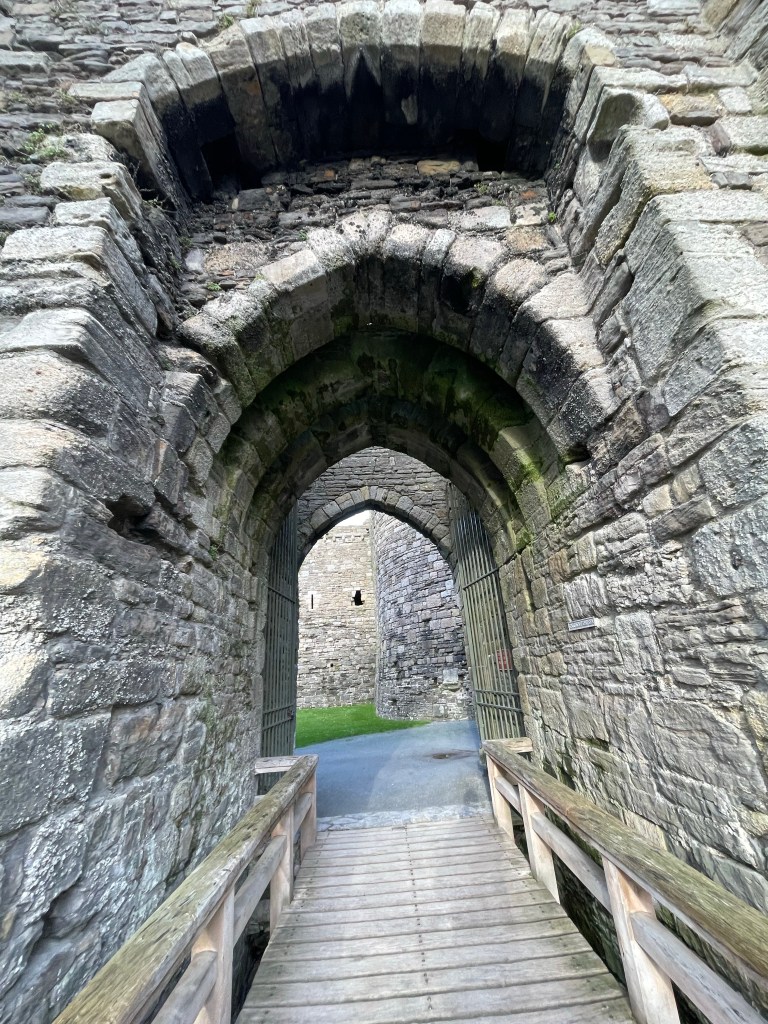
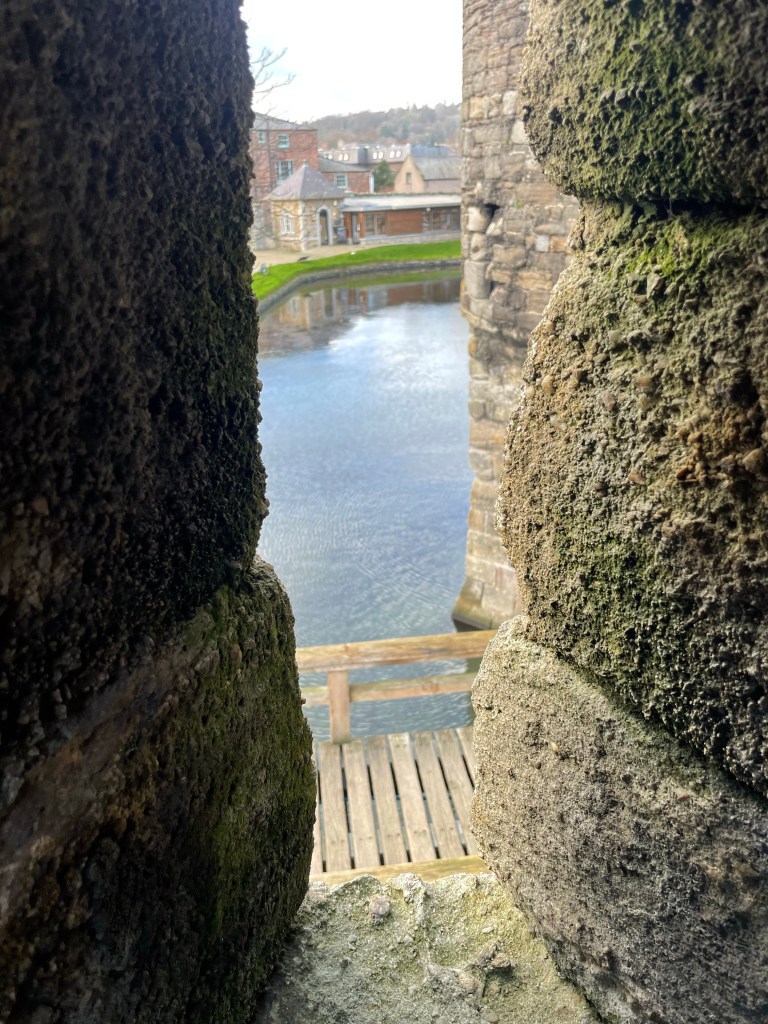
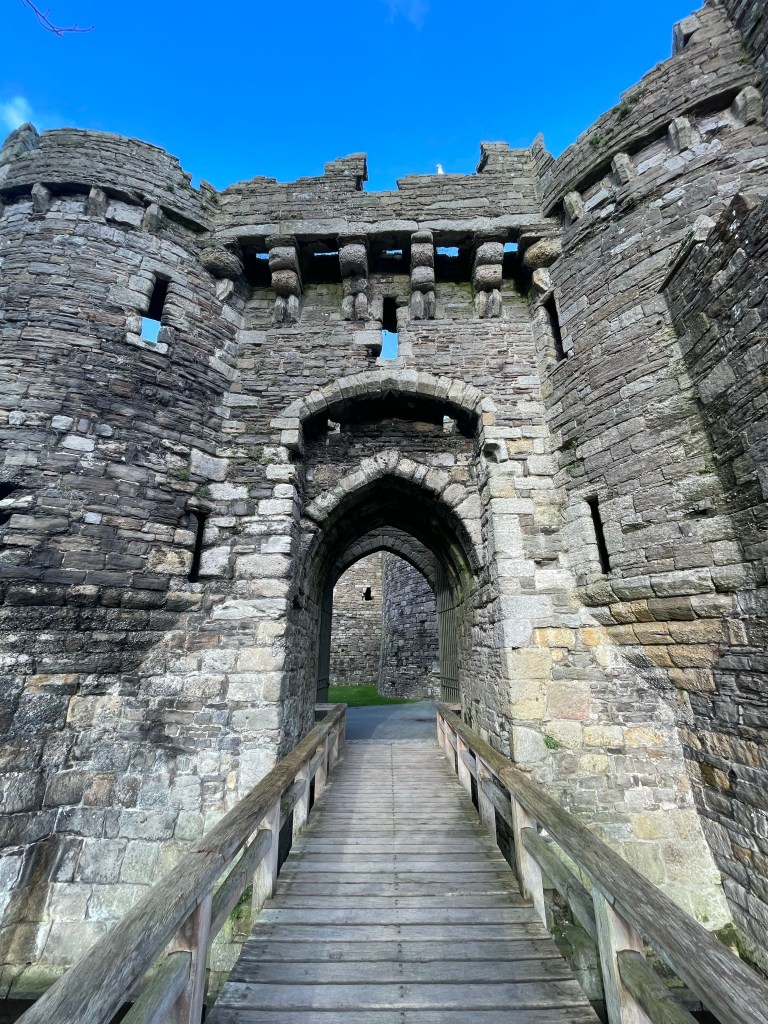
The gatehouses tend to be incredibly strong points you’ll notice these castles do not need a keep to fall back to. A wise attacker would have to seek another method of entry (and there have been some inventive methods) or face a long siege. This castle, like many other of the works by James of St George was able to be supplied by sea. Supplying a castle in this manner would have made the besieger’s life very hard indeed. This simple feature of tough defence and access to resupply is what makes these castles so strong as they counter the assault methods.
Often a lengthy siege would be the way to win but Edward’s castles could in theory still be supplied and thus beat the tactic of starving out the defenders. More likely it would be that dysentery would enter the camp of the besieger. For those interested in what this may have looked like, there are some amazing drawings by Chris Jones-Jenkins available to view online. Particularly the boats being unloaded at the dock.
The inner ward
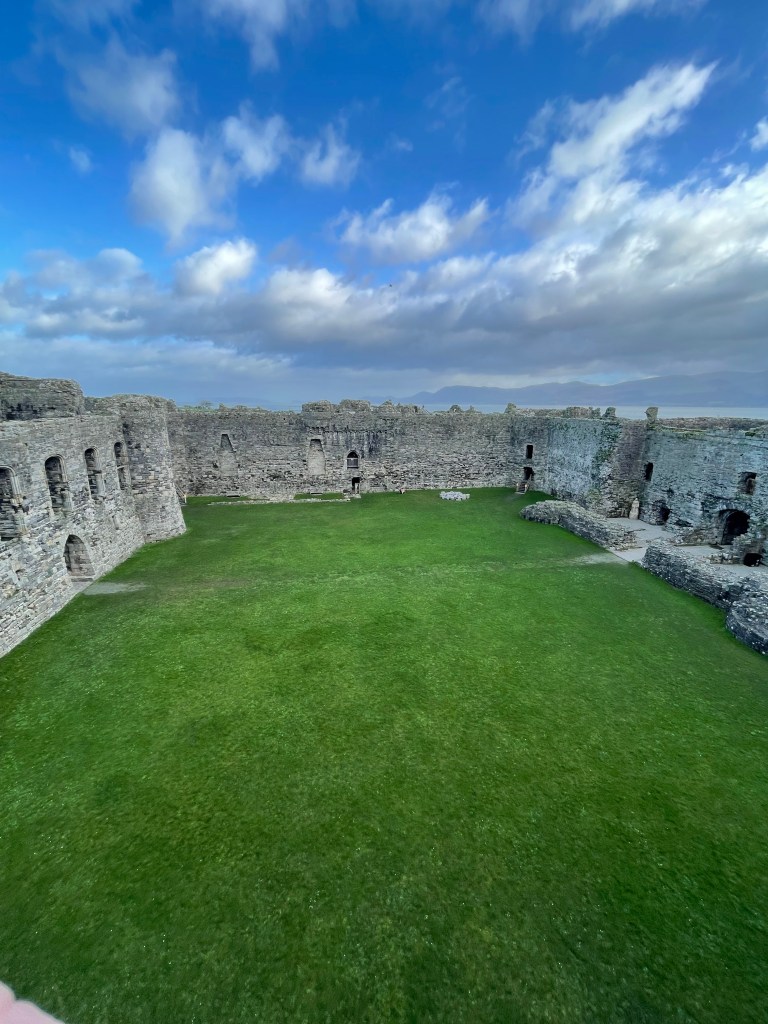
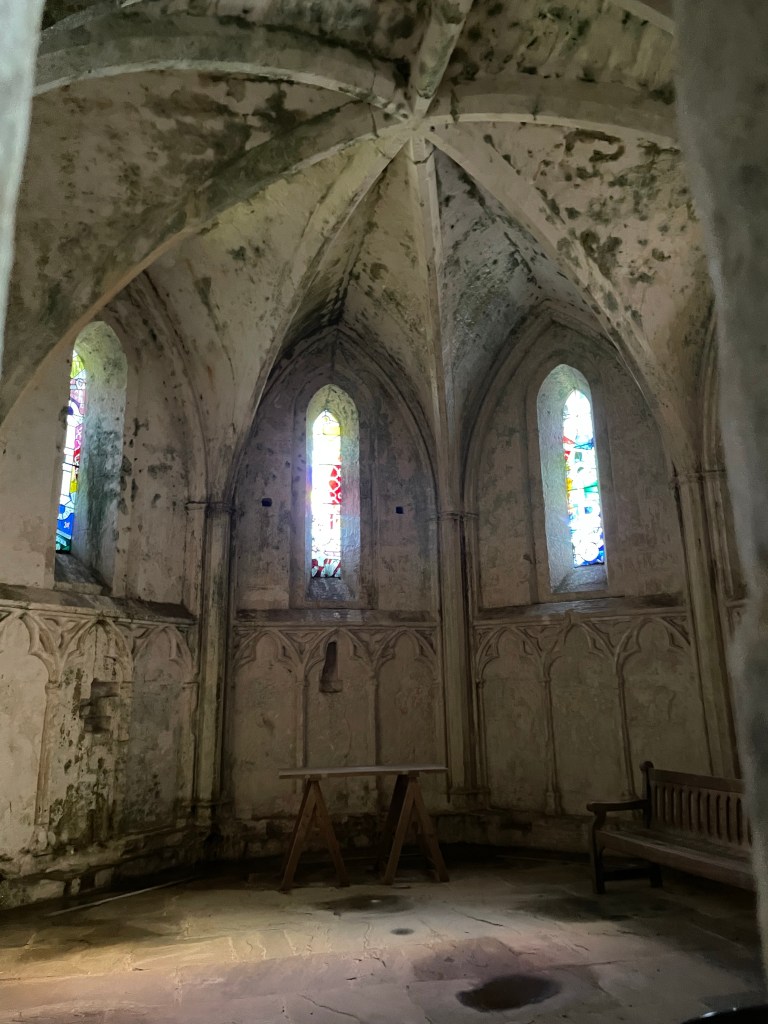
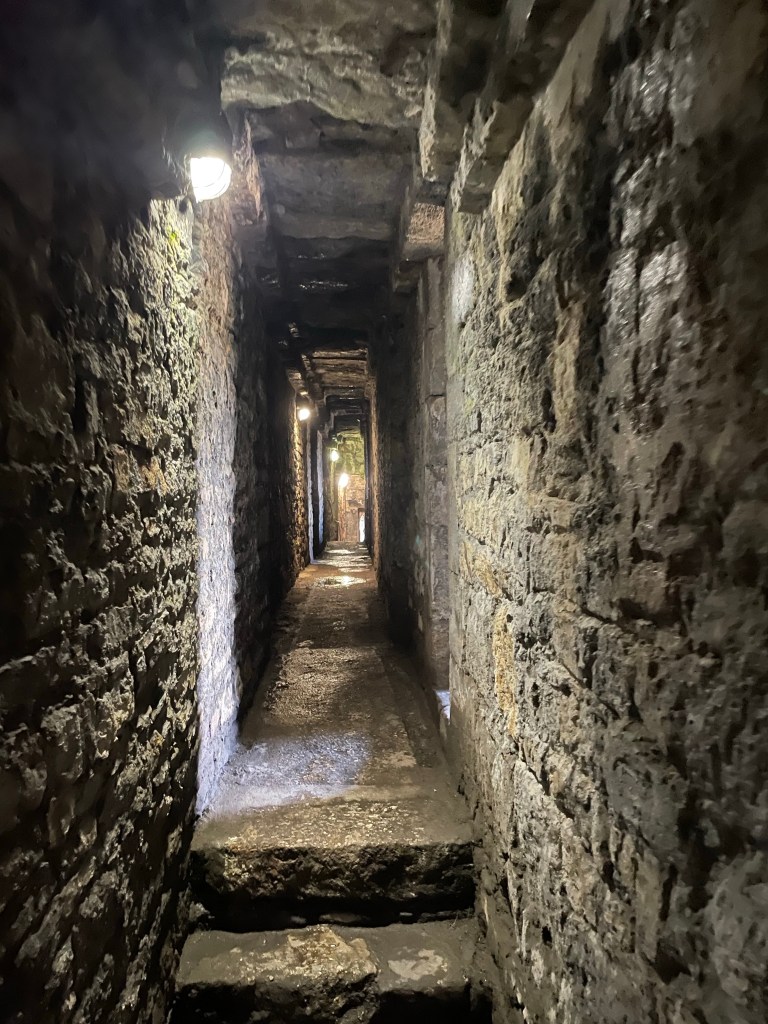
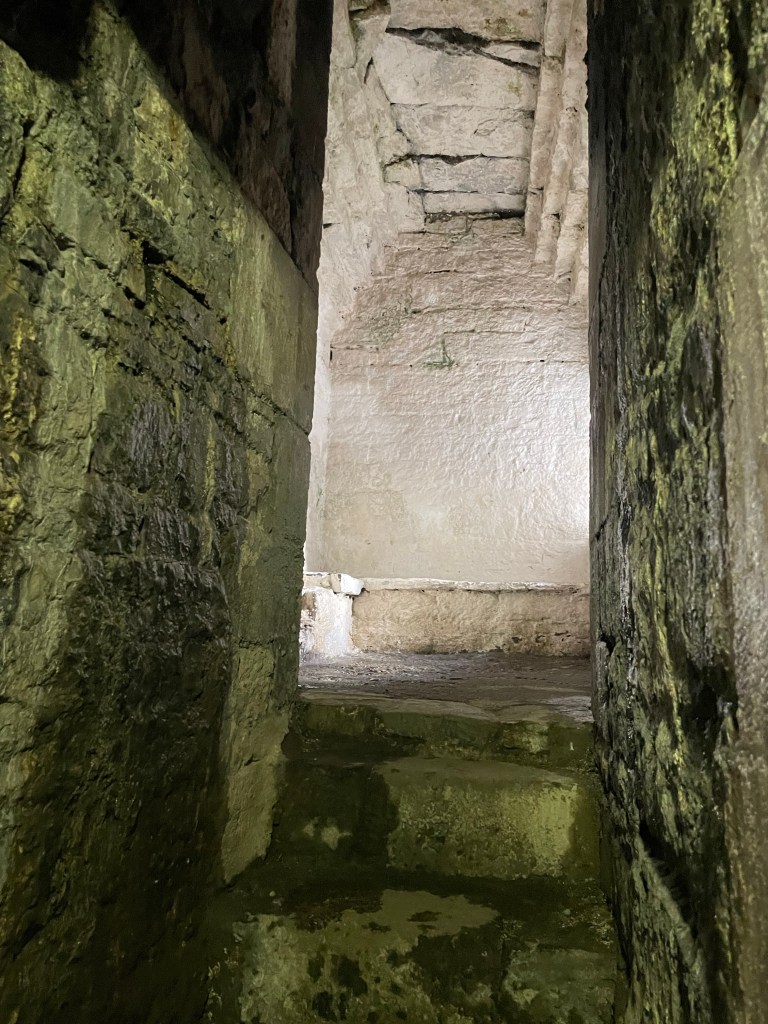
Once through the imposing gates, you are rewarded with entry to the inner workings of the castle, In modern times there is a small cinema booth provided by Cadw who maintains the castle. They run a film on a loop showing a short history of the castle. During its time in use, there would have been stables as well as the hall and chambers outside you would find a mix of small industrial buildings used to support the garrison. The space is very open inside. Much of the living quarters, prison, chapel, etc. are built into the walls themselves.
Defending the walls
The area around the castle is still as clear as it would have been. The lower outer wall is overlooked by the inner wall and has a moat for protection. Theoretically, this is the part an attacker would be considering scaling. The gatehouse is a tough nut to crack but a larger garrison (which is not always there) would be needed to man all the walled sections during an assault. A big castle is an imposing site and shows off the power of the person who orders its construction. It also creates a problem for the designers of how to have these sections of wall and not have a weak point where a crafty opponent can blindside the defenders.
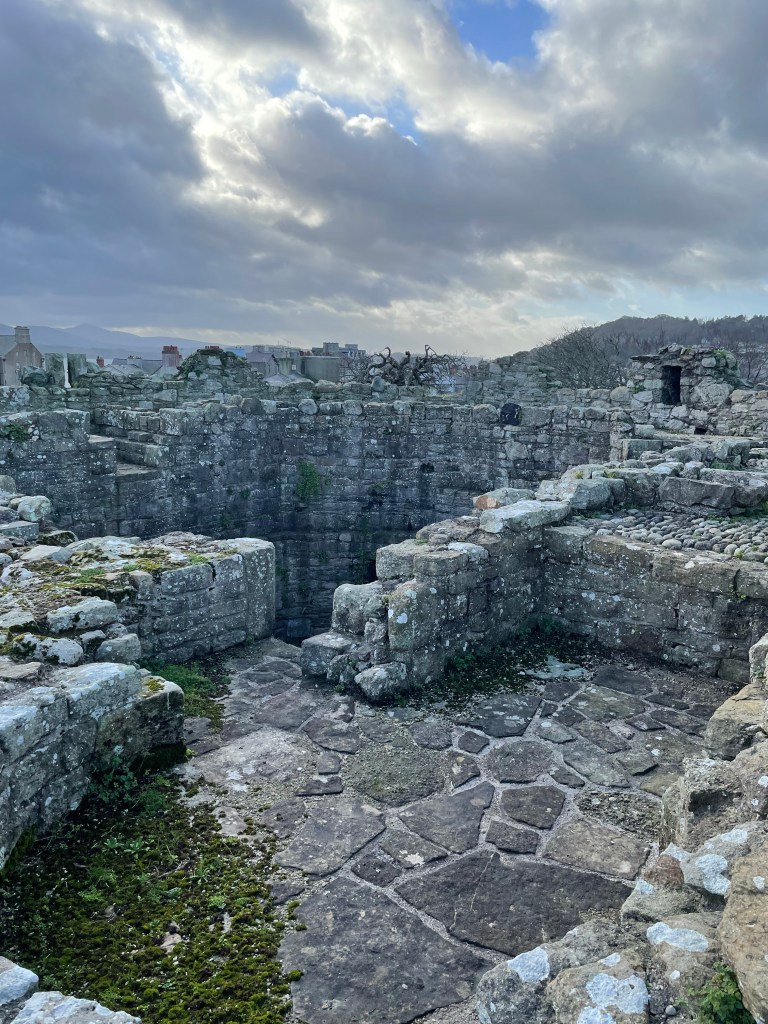
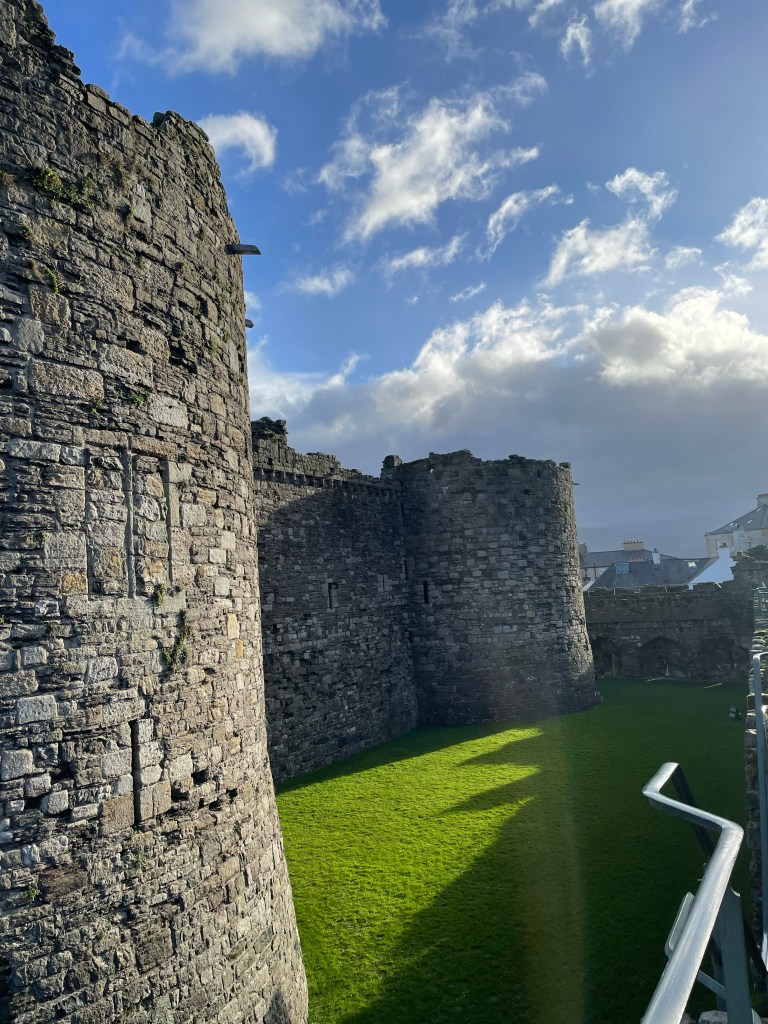
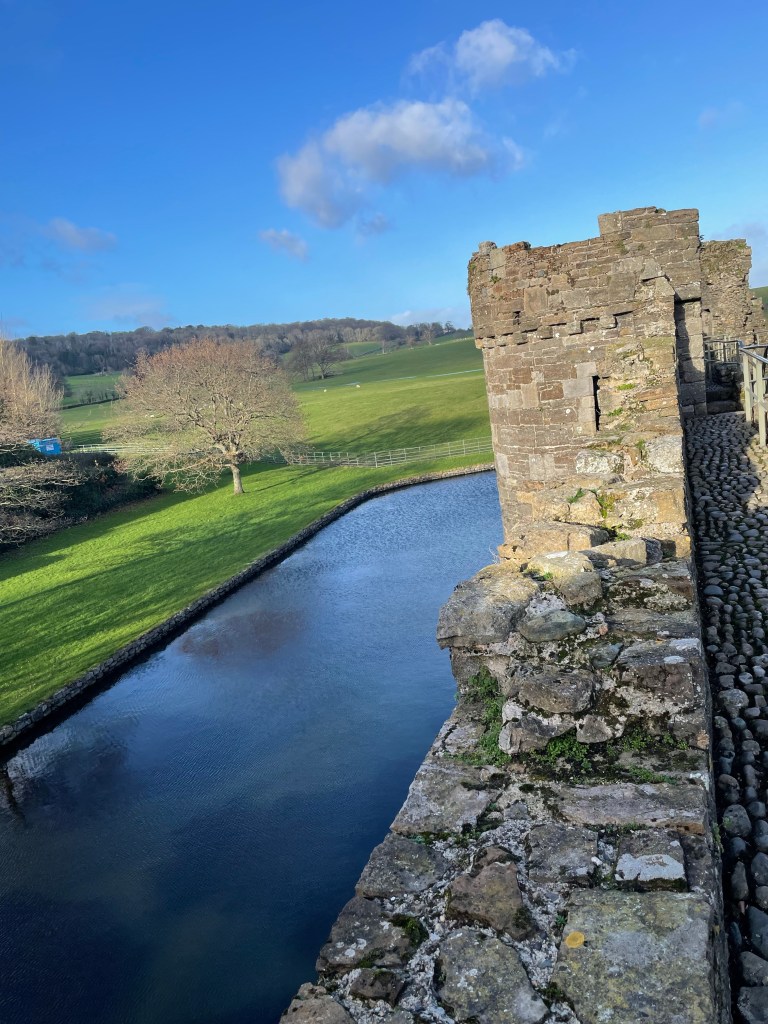
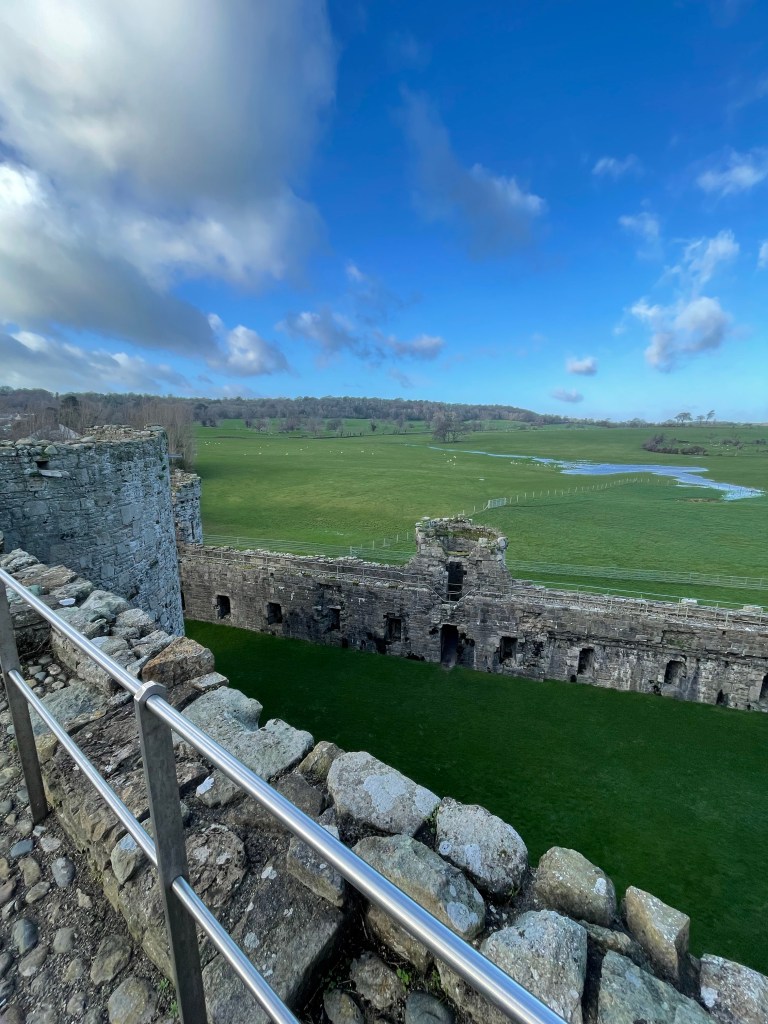

Beaumaris is a castle of concentric rings. What does this mean? Concentric castles are simply those with a Large inner wall and a slightly smaller outer wall, normally symmetrical but not necessarily circular. This gives an advantage to the defender of having archers cover both the area outside the castle and be able to pick off vulnerable attackers. This adds the disadvantage to those attacking that any equipment they used to get over the outer walls has been left behind and they are now faced with the problem of scaling a larger inner wall after they crossed the no man’s land in between.
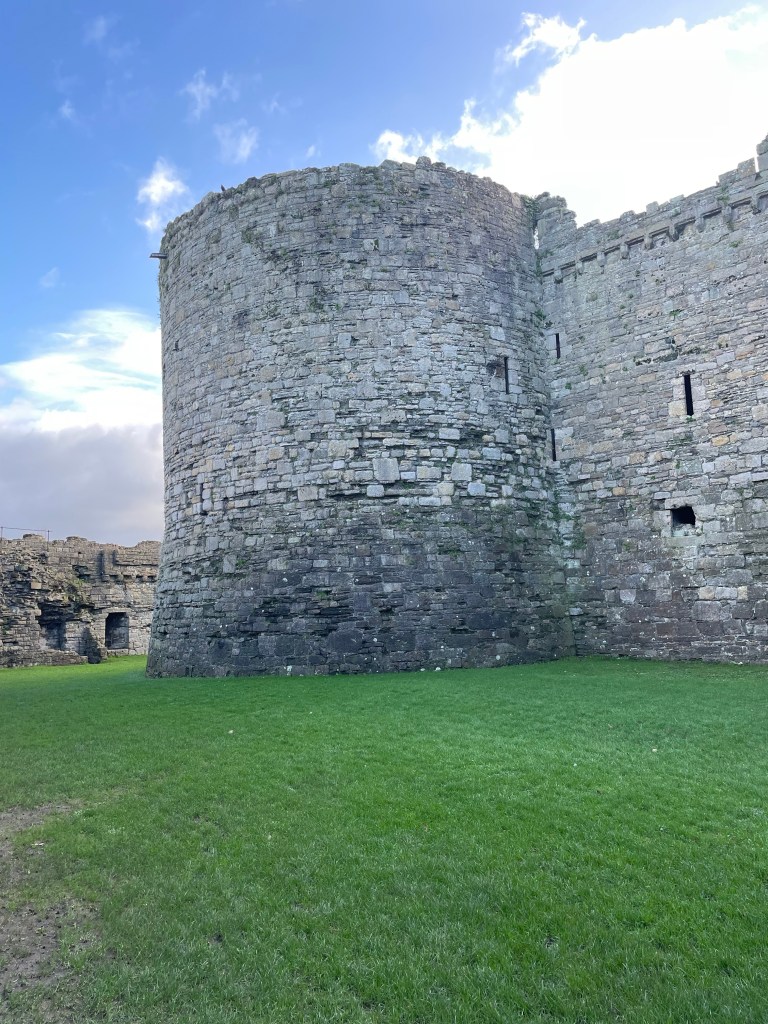
This means that the best way to beat a castle of this nature is for a long and lengthy siege. In response to this, a key feature of these castles designed by James of St. George et al was the sea gate. This would allow the defenders to be resupplied. Obviously, it would have to be very well defended as it is also a prime target for those wishing to capture the castle. All this would ramp up the cost and build time significantly. These castles in particular were expensive. Beaumaris was not finished partly because of the lack of coin, especially with Edward’s efforts now being focused on Scotland.
Town walls?
Visitors today will note the lack of a town wall such as can be seen at Conwy or Caernarfon. Beaumaris was in what could be deemed as hostile territory and certainly not popular with the locals who had been dislodged by its construction. A town wall was added sometime later when more work was being done on the castle to aid with its practicality. an outline can be seen below on this map by John Speed done in 16101. The walls did not survive to the modern day having most likely been pillaged for building material. There are some glimpses close to the castle for those observant but nothing obvious survives

A Gruesome end.
During the summer of 1592, Beaumaris was to be host to a most violent death as a catholic priest by the name of William Davis. Davis had been attempting to help other priests travel to Spain when he was arrested. He had been questioned and sent to Ludlow at one stage but all in vain as he remained defiantly catholic which under the reign of Elizabeth I was not tolerated. He would eventually be sentenced to a traitor’s death by being hung drawn and Quartered. In 1987 William was declared a catholic martyr by the pope. In addition, the ‘Blessed William Davis Catholic Primary School’ built in Llandudno would be named after him.
The English Civil War.
Holding Anglesey was of key importance for the royalist forces during the Civil War. this was a key location to bring in reinforcements from Ireland. Command of the fortress was placed in the hands of the young Richard Bulkley. His however was not to be a happy talk, enduring the embarrassment of a surrender being negotiated by a gentry he was unable to win support from and then again after regaining support following a short siege he was ill-prepared to deal with. he would ultimately die in conflict. following the war, the castle was intentionally damaged or “slighted” at the orders of parliament. over time it would fall into ruin. A sad tale for such a formidable castle that sadly never realized its true potential.
Yesterday’s castle is today’s historical site
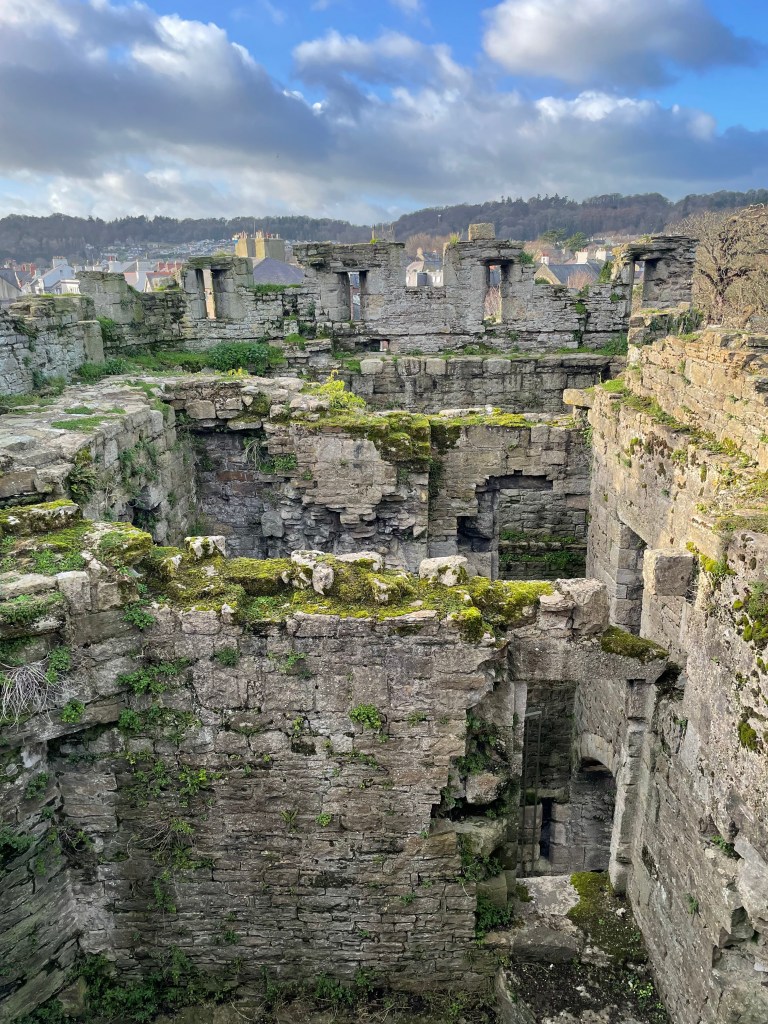
In modern times, the castle which since 1986 is on the world heritage list, is now in the care of CADW, which maintains the castle and grounds. a small entry fee is required to enter or is free to English Heritage members. It sits quietly on the coast of Anglesey as a silent sentinel and a reminder of different times. A long weekend could allow a visit to all four of the castles which made up the Iron Ring. These were an example of power and control. North Wales is a beautiful place and Anglesey is no exception. I have spent many years exploring its secrets and can fully recommend it. Thank you for reading and I hope as ever to add more soon.


 Mercian Explorer
Leave a comment